Custom Web Application Development
Bespoke platforms built around your actual workflow, dashboards, portals, booking systems and internal tools that replace the spreadsheet sprawl.
Custom platforms, CRM and ERP systems, AI automation and integrations, engineered in Kochi for businesses that have outgrown spreadsheets.
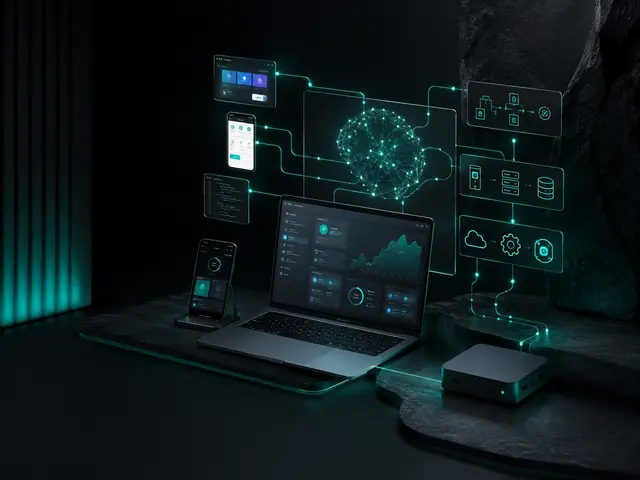
There is a point where a growing business stops being limited by demand and starts being limited by its own operations. Orders tracked in WhatsApp. Inventory in a spreadsheet somebody guards. Three systems that each hold a different version of the same customer.
Infynix Solutions builds the software that removes that ceiling. Custom web applications, multi-tenant SaaS platforms, CRM and ERP systems, and the integration layer that makes existing tools finally talk to each other.
Our engineering team works from Kochi and delivers for clients across Kerala, the wider Indian market, the UAE and the UK. We build on modern, supportable stacks, React, Node, Python, PostgreSQL, and cloud infrastructure on AWS or Azure, and we hand over the code.
A paid discovery phase producing a scoped roadmap you own outright.
Data model, integrations and infrastructure agreed before code.
Fortnightly demos, working software, no black box.
Your repositories, your infrastructure, documented.
Bespoke platforms built around your actual workflow, dashboards, portals, booking systems and internal tools that replace the spreadsheet sprawl.
Custom or heavily tailored CRM and ERP systems for businesses whose processes do not fit an off-the-shelf product without expensive compromise.
LLM-backed assistants, document extraction, intelligent routing and process automation integrated into systems your team already uses.
Connecting accounting, inventory, payment, logistics and marketing systems so data flows once and reconciles cleanly.
AWS and Azure infrastructure, CI/CD pipelines, monitoring and cost optimisation, set up so your team can deploy without us.
Migrating ageing PHP, .NET or legacy stacks onto maintainable modern architecture without a risky big-bang rewrite.
Tax invoices, credit notes, HSN and SAC codes, CGST, SGST and IGST handled correctly, with GSTR-ready data.
IRN generation through the Invoice Registration Portal for businesses above the turnover threshold, and e-way bill data for goods movement.
Tally Prime, Zoho Books, QuickBooks or Busy fed from the operational system so the accountant keeps working in the tool they trust.
Razorpay, PayU, Cashfree, PhonePe and Paytm integration, UPI intent flows, and cash on delivery reconciled properly.
Consent, purpose, access and deletion handled in line with the Digital Personal Data Protection Act.
Bilingual screens where staff or customers need them, with Malayalam typography that renders properly on cheap Android phones.
Notifications, order updates and sales conversations through the channel Kerala customers actually use.
Source code, infrastructure, documentation and credentials in your name. You are never locked to us.
| Engagement | Typical timeline |
|---|---|
| Discovery and technical specification | 2 to 3 weeks |
| MVP web or mobile application | 8 to 12 weeks |
| ERP implementation (Odoo or bespoke) | 10 to 20 weeks |
| CRM implementation and integration | 4 to 10 weeks |
| E-commerce platform | 8 to 16 weeks |
| Enterprise platform | 4 to 8 months |
| Support and maintenance | Monthly |
Patient management, appointments, billing with GST where applicable, insurance and reporting across branches.
Inventory, purchasing, multi-godown stock, sales orders and GST invoicing in one system, with Tally fed automatically.
Unit inventory, booking, payment schedule tracking, K-RERA reporting and CRM integration from lead to handover.
Admissions, student records, fees with online payment, parent apps and reporting for schools and colleges.
Dispatch, tracking, proof of delivery, driver apps and customer portals connected to billing.
Product builds for Infopark and KSUM-backed companies that need a senior team without hiring one.
Discovery produces a specification and a fixed price. Best when the problem is understood and the scope can be agreed before code is written.
A named team working on your roadmap month to month, with sprint planning and demos. Best for products that keep evolving.
A paid two to three week engagement that produces the specification, architecture and estimate, whether or not we build it.
SLA-backed maintenance, monitoring and continuous improvement for systems we built or inherited.
Every system that touches money in India sits inside the GST regime, and the rules are specific: tax invoice formats, HSN and SAC codes, place of supply logic that decides between CGST plus SGST and IGST, reverse charge in some cases, and returns that need the data organised by rate and counterparty. Businesses above the turnover threshold, currently ₹5 crore, must generate e-invoices through the Invoice Registration Portal, and goods movement above the value threshold needs an e-way bill.
A system designed without those requirements will need them retrofitted, and retrofitting tax logic into a live database is slow, risky and expensive. We design the data model, the documents and the integration points for all of it from the first sprint, so the accountant gets GSTR-ready data without exports and manual reconciliation.
Tax invoices, bills of supply, credit and debit notes with the required fields and numbering.
CGST, SGST and IGST decided correctly for intra-state, inter-state and export transactions.
IRN generation and e-way bill data through a GSP integration where the business needs it.
GSTR-1 and GSTR-3B data organised by rate and counterparty, with Tally or Zoho Books fed automatically.
The Digital Personal Data Protection Act 2023 sets out obligations on consent, purpose limitation, data principal rights and breach notification for any business processing personal data in India. Healthcare data carries additional expectations. A system built today that ignores it will need consent and rights handling added later, at exactly the moment a complaint or an audit arrives.
We design consent capture, purpose limitation, access and deletion workflows into the product, host in Indian cloud regions where residency matters, and document the reasoning so a compliance review finds it rather than a gap.
Consent capture and purpose limitation built into the product, not added as a banner.
Access, correction and erasure requests handled from the system within required timeframes.
AWS Mumbai and Hyderabad, Azure Central India, Google Cloud Mumbai, with backups in region.
Additional controls for patient data where the business handles it.
Indian commerce runs on UPI, on cash on delivery, and on a customer who expects a WhatsApp update at every step. UPI intent flows on mobile, gateway choice between Razorpay, PayU, Cashfree and PhonePe with different settlement and dispute behaviour, cash on delivery with its return rates, and courier integration through Shiprocket, Delhivery or direct APIs: each has edges that a team building for the first time discovers expensively.
We have integrated all of these and know where the edges are. The order system reconciles cash on delivery properly, records payment method against margin so the business can see what COD returns actually cost, and pushes tracking to the customer over WhatsApp and SMS. Where ONDC opens a channel, we can connect to it.
Razorpay, PayU, Cashfree, PhonePe and Paytm with UPI, cards, net banking and EMI handled correctly.
COD orders, courier remittance, returns and margin reporting handled end to end.
Shiprocket, Delhivery, DTDC, Blue Dart and India Post integrated with tracking to the customer.
Amazon, Flipkart and ONDC connections where the channel justifies it.
Most Kochi engagements are not greenfield. There is Tally, which must stay. There is a legacy system that holds years of records. There is a set of spreadsheets everyone depends on and nobody trusts. The job is to replace what is failing while keeping the business running, and to migrate data without losing history.
We plan migration as its own workstream: mapping, cleaning, trial migrations, reconciliation reports and a cutover plan with a way back. Legacy tools are retired in stages rather than switched off on a Thursday. The staff who run the old process are part of designing the new one, because they know where the exceptions are.
Mapping, cleaning, repeated trial migrations and reconciliation so the new system opens with correct balances.
Legacy modules replaced one at a time with both systems reconciled during the overlap.
The accountant keeps working in Tally, fed from the operational system.
Role-based training in Malayalam and English, with the first month live supported closely.
AI in a business system is worth building when it removes real manual work or makes a decision better, not because a pitch needed the word. The practical wins in Kerala businesses are usually document handling and forecasting: reading supplier invoices and purchase orders into structured records, forecasting demand across Onam and the monsoon, drafting replies to routine enquiries in Malayalam and English, and flagging the exceptions in a process so a person only looks at the cases that need one.
We build these on top of the operational system, using your data, with humans reviewing output until accuracy justifies removing them. Where a language model is involved, we choose the model and the hosting with data protection in mind.
Invoices, delivery notes and forms read into structured records with review queues.
Demand, cash flow and staffing forecasts from your history and the Kerala seasonal calendar.
Internal and customer-facing assistants that answer from your documents and systems, in both languages.
Approvals, notifications and hand-offs automated with exceptions routed to people.
Discovery takes the first two to three weeks: workshops with the people who run the process today, a map of the systems and data involved, a written specification, an architecture and a fixed estimate. Design follows, with clickable prototypes reviewed by the people who will use the screens, because the billing clerk and the store supervisor find the problems a project sponsor never sees.
Build runs in two-week sprints with a working demo at the end of each. Data migration rehearsals start early. User acceptance testing runs on staging with real data. Go-live is planned with a cutover checklist, a rollback path and the team at your premises for the first days. Support starts the day the system goes live.
Discovery, specification, architecture and fixed estimate.
Prototypes reviewed with the people who will use the system.
Two-week cycles with a working demo at the end of each.
Rehearsed cutover, on-site presence and SLA support from day one.
A business system is only as good as its uptime and its security. We deploy to AWS, Azure or Google Cloud in Indian regions, with infrastructure defined as code, automated backups tested by restoring them, monitoring that pages a person, and security practice that covers access control, secrets management, dependency updates and penetration testing where the risk justifies it.
After launch, support runs on a service level agreement with named response times, a monthly maintenance allowance and a roadmap for improvements. Systems inherited from other vendors go through an assessment first so we know what we are taking on.
Environments reproducible from source, so recovery and scaling are procedures rather than emergencies.
Automated backups with tested restores and a documented recovery time.
Role-based access, encrypted secrets, dependency scanning and periodic penetration testing.
Named response and resolution times, monitoring and a monthly improvement allowance.
The most expensive mistake in business software is building what you could have configured, or configuring what you needed to build. Odoo with Indian localisation covers inventory, purchasing, sales, manufacturing, HR and accounting for most trading and manufacturing businesses. Zoho One covers CRM, books, projects and people for services firms at a price that is hard to argue with. A bespoke build is justified when the process is genuinely unusual, when the volume is large, or when the system is the product.
We implement all three and recommend on the facts of your business. Often the answer is a platform for the standard modules and a bespoke component for the one process that makes the business different, integrated so the user sees one system.
Standard ERP modules with Indian GST localisation for trading and manufacturing.
CRM, books and operations for services firms at SME cost.
Where the process is unusual, the volume is large or the software is the product.
A platform for the standard, a bespoke module for the different, integrated as one.
A Kochi business usually already has an accountant on Tally, a hardware vendor, a hosting provider and maybe a freelancer who built the website. We work with all of them rather than around them. Tally stays. The hardware vendor keeps the network. The system we build is documented so any of them can understand where it fits.
Where an existing vendor built something that needs to be replaced, we assess it honestly, migrate from it carefully and say so plainly if it should be kept. The goal is a business with fewer moving parts, not a business with one more vendor.
Kept, fed automatically, never displaced.
Worked with, documented for, not worked around.
What to keep, what to replace, what to integrate, in writing.
The measure of success is a simpler business, not a bigger stack.
Kochi has the engineering talent, through Infopark, the universities and the diaspora returning from the Gulf and abroad, at a cost base below Bengaluru or Pune, and with something the remote vendors lack: we can be at your premises in Kalamassery or Vyttila this afternoon. Discovery on the floor, migration rehearsals with your storekeeper, go-live with engineers beside the billing desk. That proximity is what makes business systems succeed.
It also means the system is built for how Kerala businesses actually work: Malayalam-speaking staff, Onam peaks, cash on delivery, WhatsApp orders and an accountant who is not leaving Tally. Those are not edge cases to us. They are the brief.
Discovery, migration and go-live at your premises.
Senior engineers without Bengaluru rates.
Malayalam staff, Onam peaks, COD, WhatsApp, Tally.
Engineering capacity from the UAE and UK teams when a project needs it.
Kochi has become a genuine engineering centre, Infopark and the surrounding ecosystem mean the talent depth here is real, and the cost base is a fraction of Bangalore or the Gulf. That combination is why a growing share of our work comes from UAE and UK clients delivered out of Kochi.
For Kerala businesses it means something more practical: your development team is a drive away. We run discovery workshops in person, demo at the end of every sprint, and you can walk into our Edappally office and see the people building your system.
Every engagement is scoped individually after a discovery session, from the outcome you need and the work involved, and quoted before anything starts. Ad spend, where it applies, is separate and paid directly to the platforms, and we will say plainly if the budget on the table is too small to produce a usable result.
Yes. On final payment you own the code, the repository and the infrastructure accounts outright. We hand over documentation and run a handover period with your team. We do not hold clients hostage through access.
Predominantly React and Next.js on the front end, Node.js or Python on the back end, PostgreSQL for data, and AWS or Azure for infrastructure. React Native or Flutter for mobile. We choose based on what your team can maintain, not on what is fashionable.
Frequently, yes. We start with a paid technical audit of the existing codebase and infrastructure so we can give you an honest assessment of what is salvageable, what needs rewriting, and what it will cost, before either side commits to a full engagement.
Yes. Most clients move onto a support and enhancement retainer covering monitoring, security patching, bug fixes and a monthly allocation of development time. It is optional, if you would rather run it in-house, we will train your team.
Yes. GST-compliant invoice formats, place of supply logic, HSN and SAC handling and return-ready data are part of the standard data model. E-invoice IRN generation and e-way bill integration are added for businesses above the thresholds, through a GSP.
Yes. Most Kochi builds keep Tally Prime as the accounting system and feed it from the operational system, so the accountant works in the tool they know while the business runs on software that fits it.
Yes. Odoo with Indian localisation is our default recommendation when a business needs standard ERP modules and not a fully bespoke system. We implement, configure, customise and integrate it, and build bespoke modules where it does not fit.
Razorpay, PayU, Cashfree, PhonePe and Paytm, with UPI, cards, net banking and EMI options, plus cash on delivery workflows with courier remittance reconciled. We recommend a gateway from your volumes and settlement needs.
In Indian cloud regions on AWS, Microsoft Azure or Google Cloud, with backups in region. The choice is made in discovery and documented, with the DPDP Act in mind.
Yes. We wrap legacy systems with APIs, migrate data in rehearsed stages with reconciliation at each step, and retire old modules one at a time. The business keeps running through the overlap and there is always a way back at cutover.
You do. Source code, infrastructure, documentation and credentials are handed over in your name, and the system is built so another competent team could run it. We would rather keep clients by being good than by being unavoidable.
Yes. We build products for early-stage companies that need a senior engineering team without hiring one, on a dedicated team or fixed-scope basis, with the architecture documented so an in-house team can take over as the company grows.
Odoo with Indian localisation for trading and manufacturing businesses that need standard ERP modules. Zoho for services firms that need CRM, books and operations at SME cost. A bespoke build where the process is genuinely unusual, the volume is large or the software is the product. We implement all three and recommend on your facts, often a platform plus one bespoke module.
Scope drives the number, so the honest answer comes after a short discovery rather than before it. What we commit to in advance is that the quote is fixed for the agreed scope, that there are no surprise extras, and that we tell you when a cheaper route would serve you better.
Yes to both. NDAs are signed before discovery, and we work alongside in-house IT, the accountant on Tally, hardware vendors and existing developers, documenting the system so any of them can understand where it fits.
Discovery can usually begin within two weeks of agreement, and the first working release is typically live within eight to twelve weeks of discovery ending.
Tell us what you are trying to grow and we will tell you honestly whether we are the right people for it.
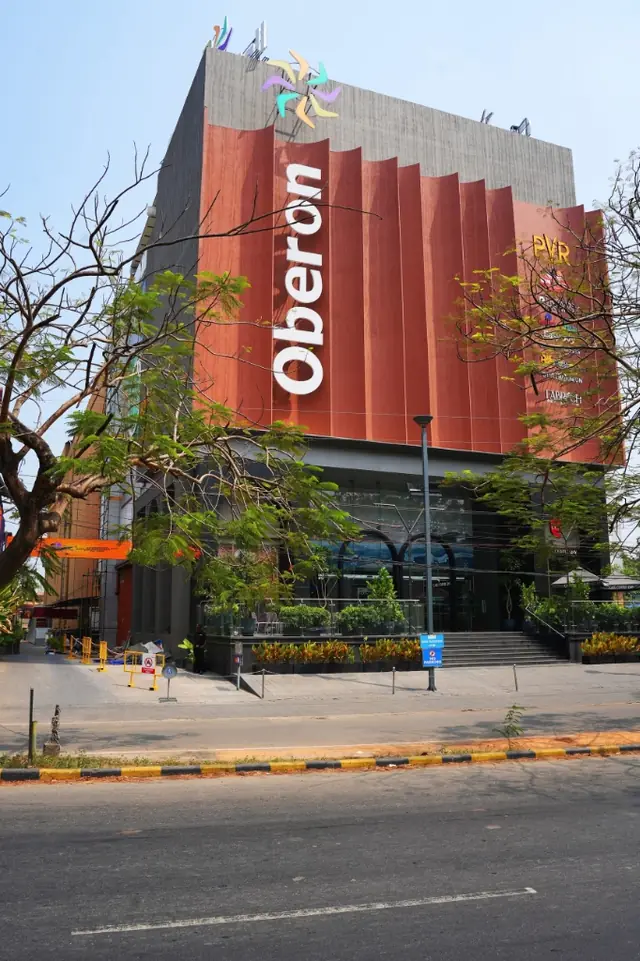
3rd Floor, Oberon Mall, Padivattom, Edappally, Kochi, Kerala 682024